
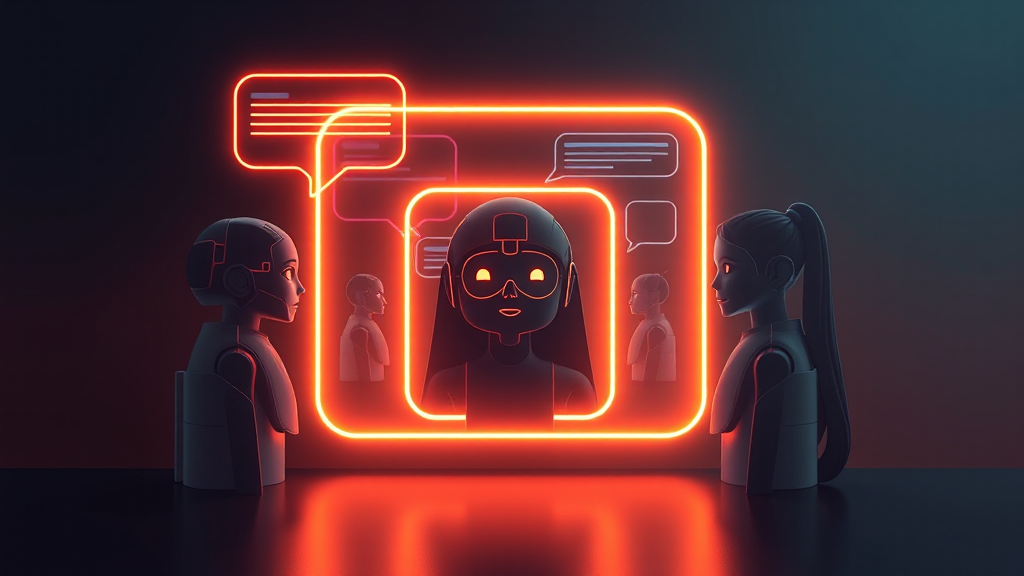
Inside https://chat.crushon.ai/character-ai-chat: How Character-Driven AI Conversations Are Reshaping Digital Interaction
Conversational AI has moved far beyond the era of rigid chatbots that could only answer a handful of scripted questions. Today, users expect personality, memory, emotional nuance, and a sense of continuity when they talk to a machine. That shift is exactly what platforms like https://chat.crushon.ai/character-ai-chat are built to address. Instead of a faceless assistant that resets with every session, character-based AI chat introduces distinct personas, consistent voices, and richer back-and-forth exchanges that feel closer to talking with someone than querying a database.
This article explores what character-driven AI chat actually means, why it is gaining traction across entertainment, education, and companionship use cases, and how a platform such as Crushon’s character AI chat fits into the broader evolution of human-computer interaction. We will look at the mechanics behind persona consistency, the practical benefits for users, and the considerations anyone should keep in mind before diving in.
What Makes Character AI Chat Different From Standard Chatbots
A conventional chatbot is optimized for tasks: booking a flight, resetting a password, answering a FAQ. Its success metric is accuracy and speed. Character AI chat optimizes for something harder to quantify — the quality and continuity of an ongoing relationship with a persona. That distinction changes almost everything about how the underlying system is designed.
When you open a standard assistant, you get a blank slate every time. When you open a character-based experience, the persona is expected to remember context, maintain a consistent tone, and react in ways that align with a defined personality. A witty mentor should stay witty. A calm companion should not suddenly become brusque. This consistency is what makes the conversation feel believable, and it is what separates a memorable interaction from a disposable one.
Platforms in this space typically combine large language models with persona conditioning, memory layers, and sometimes safety filters tuned to the specific character. The result is a conversation that can drift into storytelling, emotional support, roleplay, or creative brainstorming without losing its footing. That flexibility is precisely why https://chat.crushon.ai/character-ai-chat positions itself around characters rather than generic assistance.
Why Persona Consistency Matters More Than Raw Model Size
It is tempting to assume that the biggest model always wins. In character chat, that assumption breaks down quickly. A model with enormous parameter counts can still produce a forgettable experience if it cannot hold a persona together across a long conversation. Consistency, not sheer scale, is the real currency here.
Several technical ingredients contribute to that consistency:
- Persona conditioning: The model is guided by a detailed description of the character’s background, speech patterns, values, and quirks.
- Memory and context handling: Earlier parts of the conversation are summarized or retrieved so the character can reference them naturally.
- Style anchoring: Response formatting, vocabulary, and rhythm are tuned to match the persona rather than defaulting to a neutral assistant voice.
- Boundary logic: The character knows what it would and would not do, which prevents jarring out-of-character moments.
When these elements work together, users stop noticing the machinery and start engaging with the character. That is the moment character AI chat becomes genuinely useful rather than merely novel.
Practical Use Cases Beyond Entertainment
It is easy to frame character AI as pure entertainment, but the applications run wider than that. Creative writers use character chat to stress-test dialogue and explore how a protagonist might react in an unfamiliar situation. Language learners practice conversation with a persona that will not judge them for mistakes. People who feel isolated sometimes use a character as a low-pressure space to think out loud.
There is also a growing professional angle. Product teams prototype conversational interfaces by building a character first and refining the tone before wiring up real backend logic. Marketers test how a brand voice sounds when it has to sustain a multi-turn exchange rather than deliver a one-line slogan. In each case, the character becomes a sandbox for behavior that would be expensive or risky to test with real people.
What ties these use cases together is the need for a conversational partner that feels stable over time. A one-off answer is rarely enough; users want to return to the same personality and pick up where they left off. That continuity is the core value proposition of character-driven platforms, and it is why the category keeps expanding.
How to Get More Out of a Character AI Chat Session
New users often approach character chat the way they would approach a search engine — short, transactional queries. That works, but it undersells the experience. A few habits make a noticeable difference:
- Set the scene. Give the character a little context about what you want from the conversation. A sentence or two of framing goes a long way.
- Stay in character yourself. If you are roleplaying, commit to it. The model mirrors the energy it receives.
- Use follow-up questions. Depth comes from iteration, not from a single perfect prompt.
- Correct gently. If the persona drifts, a short nudge usually brings it back without restarting the session.
- Explore different characters. Different personas surface different conversational styles, and switching can reveal what you actually enjoy.
These small adjustments turn a novelty into a genuinely engaging tool. The platform provides the infrastructure; the user provides the direction.
Responsible Use and Realistic Expectations
Any honest discussion of character AI has to include limits. These systems are not conscious, they do not have feelings, and they can occasionally produce inaccurate or out-of-character responses. Treating a character as a friend or therapist substitute can be tempting, especially when the conversation feels warm, but it is healthier to view the interaction as a creative and reflective tool rather than a replacement for human connection.
Privacy also deserves attention. Conversations with a character may be stored to support memory features, so users should avoid sharing sensitive personal information they would not want retained. Reading a platform’s data practices before committing to long-term use is a simple but important step.
Finally, moderation matters. A well-designed character chat experience includes guardrails that keep interactions safe without flattening the personality. The balance between freedom and safety is an ongoing design challenge across the entire industry, and it is one users should evaluate when choosing where to spend their time.
The Road Ahead for Character-Driven AI
The trajectory is fairly clear. As memory systems improve and multimodal input becomes standard, characters will be able to reference images, voice, and long-term context in ways that make them feel even more present. We are likely to see characters that span multiple sessions, remember preferences, and adapt their tone based on how a user is feeling — all while staying recognizably themselves.
That future raises interesting questions about identity, authorship, and emotional attachment. But it also opens creative doors that were closed just a few years ago. Writers, learners, designers, and curious users all stand to benefit from a conversational layer that feels less like a tool and more like a collaborator.
For anyone curious about where this is heading, spending time with a character-driven platform is the fastest way to understand the shift. The experience is difficult to convey in the abstract; it has to be felt in the back-and-forth of an actual conversation. That is ultimately what makes https://chat.crushon.ai/character-ai-chat worth exploring — not as a novelty, but as a window into how we will talk with machines in the years to come.
FAQ
What exactly is character AI chat?
Character AI chat refers to conversational systems built around a defined persona rather than a generic assistant. The character has a consistent voice, background, and behavioral style, and the system tries to maintain that identity across multiple turns and sessions.
Is character AI chat free to try?
Many platforms offer a free entry point with optional premium tiers. Availability, message limits, and feature access vary by provider, so it is worth checking the specific platform’s current terms before signing up.
Can a character AI remember previous conversations?
Memory features depend on the platform. Some systems retain context within a single session, while others support longer-term memory that carries across sessions. Memory improves continuity but also raises privacy considerations, so users should review how data is handled.
Is character AI chat safe to use?
Reputable platforms include moderation and safety filters, but no system is perfect. Users should avoid sharing sensitive personal information, treat the character as a creative tool rather than a substitute for human relationships, and follow the platform’s guidelines.
What can I actually do with a character AI chat?
Common uses include creative writing, roleplay, language practice, brainstorming, and casual conversation. The value comes from sustained interaction with a consistent persona rather than one-off question answering.
Readers who are interested in this topic will benefit from exploring multiple perspectives and understanding the nuanced approaches that industry leaders recommend. Taking time to research thoroughly ensures better outcomes and more informed decision-making.
Those looking to gain deeper knowledge in this area should consider following expert analysis, staying updated with the latest developments, and engaging with professional communities where these topics are discussed in detail.
A comprehensive understanding of this subject requires looking at both theoretical foundations and practical applications. By combining study with hands-on experience, learners can develop a well-rounded perspective that serves them well in real-world scenarios.
As the landscape continues to shift and evolve, staying informed about emerging trends and best practices becomes increasingly valuable. This ensures you remain competitive and capable of adapting to new challenges as they arise.
